Review: Education and Learning Icon - Line Style
As a designer who spends half my day tweaking stitch paths and the other half worrying about whether a client’s vision will actually survive the embroidery hoop, I approach every new machine embroidery design with a healthy dose of skepticism. We have all seen beautiful vector graphics that look stunning on a screen but turn into a muddy, unrecognizable blob once they hit the fabric. This is where the real work begins. Today, I am evaluating the Education and Learning Icon - Line Style, a product categorized under Icons and Graphics, to see if it holds up in a practical, real-world embroidery scenario.
First Impressions: Clean Lines Meet Thread Tension
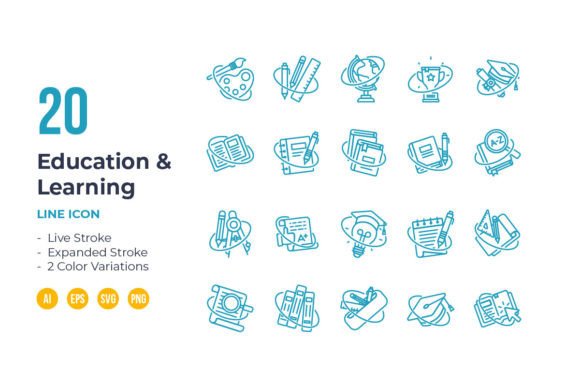
The moment you load the file for the Education and Learning Icon - Line Style, the aesthetic speaks for itself. It is simple, clean, and relies heavily on negative space. In the world of digital design, this is often easy to achieve. In embroidery, however, "simple" can be deceptive. A line style design depends entirely on the integrity of its outlines and the precision of its satin stitch execution. If the thread tension is off by even a fraction, those crisp lines can pucker or break, ruining the professional look of the final piece.
Mood-wise, this icon feels academic yet modern. It does not scream "traditional school" with heavy serif fonts or complex crests. Instead, it offers a minimalist vibe that suggests clarity, focus, and growth. For a designer looking to create a custom apparel item that feels current rather than dated, this visual personality is a strong asset. It works well for teachers, students, homeschooling parents, and educational startups who want branding that feels approachable and sleek.
Real-World Application: The Custom Tote Bag Scenario
Let us imagine a specific use case. You are an Etsy seller preparing inventory for back-to-school season. Your goal is to create a high-margin, personalized gift item. You decide on a sturdy canvas tote bag intended for college students or young professionals carrying their laptops and notebooks. The customer wants something subtle—a nod to their major or profession without being overly literal.
This is where the Education and Learning Icon - Line Style shines. Because the design is based on a 64px grid size, it translates beautifully to a chest placement on a tote bag. It is small enough to be elegant but large enough to be noticed. Unlike a busy graphic that requires extensive fill stitch areas (which can make a tote bag stiff and heavy), this line-art approach keeps the fabric flexible and comfortable. When stitched in a contrasting thread color—perhaps navy blue on a cream canvas or white on black—it creates a sharp, legible logo that customers will be proud to carry. It elevates a basic commodity into a branded handmade product.
Performance Across Different Projects
Beyond the tote bag, this design has versatile potential across various categories of embroidery project work. Here is how it performs in different contexts:
- Apparel and Sweatshirts: On a crewneck sweatshirt, this icon works exceptionally well as a small left-chest logo. It pairs nicely with running stitch details if you add a small tagline underneath. It maintains its clarity because it avoids dense clustering of stitches.
- Baby Embroidery: For onesies or burp cloths, simplicity is key. Parents often prefer designs that are soft to the touch and free of rough edges. The clean lines of this icon mean fewer layers of thread, resulting in a softer finish against sensitive skin. It is perfect for personalized gift sets featuring initials alongside the icon.
- Embroidered Patches: If you are creating patches for jackets or bags, this design provides a strong central focal point. The line style allows for clean applique bases if you choose to combine techniques, though it stands strong on its own with a proper satin border.
- Kitchen and Home Decor: Imagine this on a tea towel or a kitchen apron for a teacher’s home. It adds a touch of personality to everyday items. However, caution is needed here regarding washability, which we will discuss below.
Digital Assets and Mockups
For those selling digital embroidery files or creating printable mockups for their shops, this design is a valuable asset. Its vector nature means it scales without losing quality, allowing you to present your products in various sizes on social media. A clear, high-contrast image of this icon on a dark background grabs attention in a crowded feed, signaling professionalism and attention to detail to potential buyers.
Where to Use Caution: Limitations and Risks
No design is perfect, and as an experienced reviewer, I must highlight where the Education and Learning Icon - Line Style might struggle. Precision is its greatest strength, but also its vulnerability.
Small Hoop Sizes: While the design is scalable, stitching extremely small details requires a stable setup. If you attempt this on a very small hoop with thin fabric, the risk of puckering increases. Always test on scrap fabric first.
Textured and Stretchy Fabrics: Avoid using this design on highly textured fabrics like chunky knits or thick fleece unless you are using a heavy-duty stabilizer. The fine lines may get lost in the weave. Similarly, stretchy fabrics like jersey require careful hooping and potentially a cut-away stabilizer to prevent the design from distorting during wear.
Dense Stitch Areas: Although this is a line design, ensure that the corners and intersections do not become too dense. Excessive overlap can lead to needle breaks or bulky spots that are uncomfortable to wear. Check the stitch density in your software before sending it to the machine.
Frequent Washing: For items like aprons or tote bags that undergo frequent washing, the longevity of the thread matters. Light-colored threads on dark backgrounds may fade faster than darker threads on light backgrounds. Advise your customers on care instructions to maintain the crispness of the finished product.
Practical Designer Notes for Success
To ensure the Education and Learning Icon - Line Style delivers maximum value, follow these practical steps:
- Test on Scrap Fabric: Never run a production order without a test run. This helps you identify any threading issues or tension problems early.
- Check Thread Color Contrast: Ensure there is sufficient contrast between the thread and the fabric. Low contrast can make the design invisible or hard to read.
- Review Stitch Density: Look at the design in your embroidery software. Are there any areas where the stitches are too close together? Adjust if necessary to prevent bulk.
- Confirm Hoop Size: Make sure your machine’s hoop can accommodate the design dimensions with a little margin for error.
- Inspect Small Details: Zoom in on the digital file. Are there any tiny elements that might not stitch out clearly? Simplify if needed.
- Use Proper Stabilizer: Choose the right stabilizer (cut-away, tear-away, or water-soluble) based on the fabric type to support the satin stitch edges.
- Check Licensing: Before selling finished items or distributing the design assets, verify the license terms. Some files are for personal use only, while others allow commercial sale of the physical product.
Final Verdict
The Education and Learning Icon - Line Style is a thoughtful, well-executed addition to any designer’s library. It captures a modern, professional aesthetic that resonates with today’s market for clean, minimalist branding. Whether you are creating commercial embroidery pieces for clients, building your own craft business brand, or making a heartfelt holiday gift, this design offers reliability and visual appeal.
Its success lies in its restraint. It does not try to do too much, which makes it easier to stitch correctly and more likely to stand the test of time. By paying attention to fabric choice, stabilizer selection, and thread contrast, you can transform this simple icon into a sophisticated handmade product that customers will appreciate. For designers seeking a versatile, high-quality graphic that bridges the gap between digital clarity and tactile craftsmanship, this is a solid choice.